
Curry County Criminal Court Records
A criminal court record is the case-level file kept by the court after a criminal case begins. In Curry County, felony criminal case files belong in District Court. Misdemeanors, DWI/DUI, traffic-related criminal matters, and limited criminal proceedings may be in Magistrate Court or Municipal Court depending on the charge and the issuing agency. The District Court Clerk keeps District Court records, while the lower courts maintain their own limited-jurisdiction records.
The full criminal court record is broader than the first charge seen after arrest. It can include the complaint, criminal information or indictment, case number, charges, statute numbers, arraignment, counsel entries, motions, plea, disposition, judgment or sentence, probation terms, bond, warrants or failure-to-appear events, and hearing entries. Jail booking data may help identify a court case number, but the case file and outcome are court records. For a narrower look at booking charges and court charges after arrest, use the Curry County arrest records and charges page.
Search Curry County Criminal Court Records
The main online search source is New Mexico State Judiciary Case Lookup. For Curry County District Court criminal cases, select court type D - District Court and location 905 - CLOVIS. For misdemeanor, DWI/DUI, traffic, and felony preliminary matters, select court type M - Magistrate Court and location 12 - CLOVIS. For municipal criminal matters, select court type U - Municipal Court and the known city, such as Clovis, Melrose, Texico, or Grady. Public municipal data in Case Lookup is limited in scope.
- Open Case Lookup and accept the disclaimer for individual record viewing.
- Search by defendant name in last, first, middle order, or use the direct case number if known.
- Filter by court type and Curry County location to avoid unrelated statewide matches.
- Open the matching criminal case and review charges, hearings, docket entries, plea, disposition, and sentence fields.
- Request copies from the court where the case was filed when a document, certified copy, older record, or correction is needed.
Case Lookup is not a criminal-history background check and is not a PDF download site. The New Mexico Courts public access source says documents are not available in Case Lookup, juvenile criminal cases are not displayed, and some protection-order cases are not displayed. For statewide custody, prison, probation, or parole status, New Mexico Corrections Department systems are separate from Curry County criminal court records.
Curry County Criminal Case Stages
A criminal case record grows as the case moves through court. The filing may begin with a complaint, criminal information, or indictment. After filing, arraignment records show that charges were read and a plea could be entered. Pretrial docket entries can include counsel appearances, motions, notices, continuances, bond issues, and hearing settings. The outcome appears later as a plea, trial result, dismissal, judgment, sentence, probation term, fine, restitution, or appeal entry.
Case flow: Charges Filed › Arraignment › Pretrial / Motions › Plea or Trial › Disposition › Sentencing
| Stage | What Happens |
|---|---|
| Charges filed | A complaint, criminal information, or indictment states the alleged offenses and statute numbers. |
| Arraignment | The defendant is advised of charges, and a plea may be entered. |
| Pretrial / motions | The record may show attorney entries, bond review, motions, notices, orders, and hearing changes. |
| Plea or trial | The case may resolve by plea, trial verdict, dismissal, or other disposition. |
| Sentencing | The court records sentence terms, probation, fines, fees, restitution, or custody-related orders when applicable. |
Curry County Criminal Record Fields
New Mexico electronic records use court-coded case numbers and docket entries. A District Court criminal case in Clovis can use a format like D-905-CR-year-sequence, while a Magistrate Court matter can use M-12 and a case category. Public records may show enough to follow a case, but documents are not attached in Case Lookup. Redactions also matter: Social Security numbers, address information, and other personal identifiers are not available in the public-facing system.
| Field | What It Shows |
|---|---|
| Case Number | The court-coded case identifier, including District Court 905 or Magistrate Court 12 clues. |
| Defendant | The person accused in the criminal case, with public identifiers limited by court rules. |
| Charges | Alleged offenses tied to statutes or ordinances, which may change during the case. |
| Docket Entries | Filings, hearings, motions, orders, notices, pleas, warrants, bond activity, and sentencing events. |
| Plea | The defendant's response, such as guilty, not guilty, or another plea shown in the record. |
| Disposition | The outcome of a charge or case, including dismissal, conviction, acquittal, or other resolution. |
| Sentence | Punishment or conditions imposed after conviction, such as custody, probation, fines, fees, or restitution. |
Charges vs Convictions
Being charged is not the same as being convicted. A Curry County criminal court record can show charges that are pending, amended, reduced, dismissed, or resolved by plea or trial. A conviction appears only when the case outcome supports it through a guilty plea, verdict, or other qualifying adjudication. The distinction matters for reading court records, because an early charge line may not match the final judgment or sentence.
| Charge | Conviction | |
|---|---|---|
| Meaning | An accusation that a statute or ordinance was violated. | A final outcome based on plea, verdict, or adjudication. |
| Timing | Appears early and can change as the case moves. | Appears after disposition and often before or with sentencing. |
| Record risk | Can remain visible even if later dismissed unless sealed or expunged. | Can carry sentence, probation, fine, restitution, and future eligibility consequences. |
Read Dispositions and Sentences
Disposition means the outcome of a charge or case. Research glossary terms identify dismissal with prejudice as a case or charge ending in a way that cannot be refiled on the same claim, and dismissal without prejudice as an ending that may permit refiling when law allows. A sentence is different from a disposition. It is the punishment or conditions imposed after conviction. Probation is court-ordered supervision instead of, or after, custody. Bond is security or a promise used for release from custody while the case is pending.
A criminal record can also show warrants, bench warrants, or capias entries. A bench warrant is often tied to missed court. A capias is arrest process for failure to appear or obey a court order. If a person is trying to confirm a live warrant before arrest, use official court or sheriff channels and be careful about relying on old docket text alone.
Sealed vs Expunged Records
Sealing and expungement are different public-access limits. Sealing is a court-access term under rules such as Rule 1-079 and juvenile statutes. Expungement in the New Mexico criminal-record context is the statutory process under Chapter 29, Article 3A. The New Mexico Courts expungement page routes users to petitions and instructions by case type rather than by county.
| Sealed | Expunged | |
|---|---|---|
| Main effect | Public access is limited by court rule, statute, or court order. | Qualifying criminal and related public records are removed from general public access. |
| How it happens | Usually requires a court order or statutory authority. | Requires a qualifying petition and court order under the Criminal Record Expungement Act. |
| Limits | Authorized parties may still have access depending on the order and law. | Some agencies, courts, licensing bodies, law enforcement, or later court orders may still have limited access. |
The official New Mexico Courts expungement source assigned to Curry County criminal court records provides the state forms and route for this process.
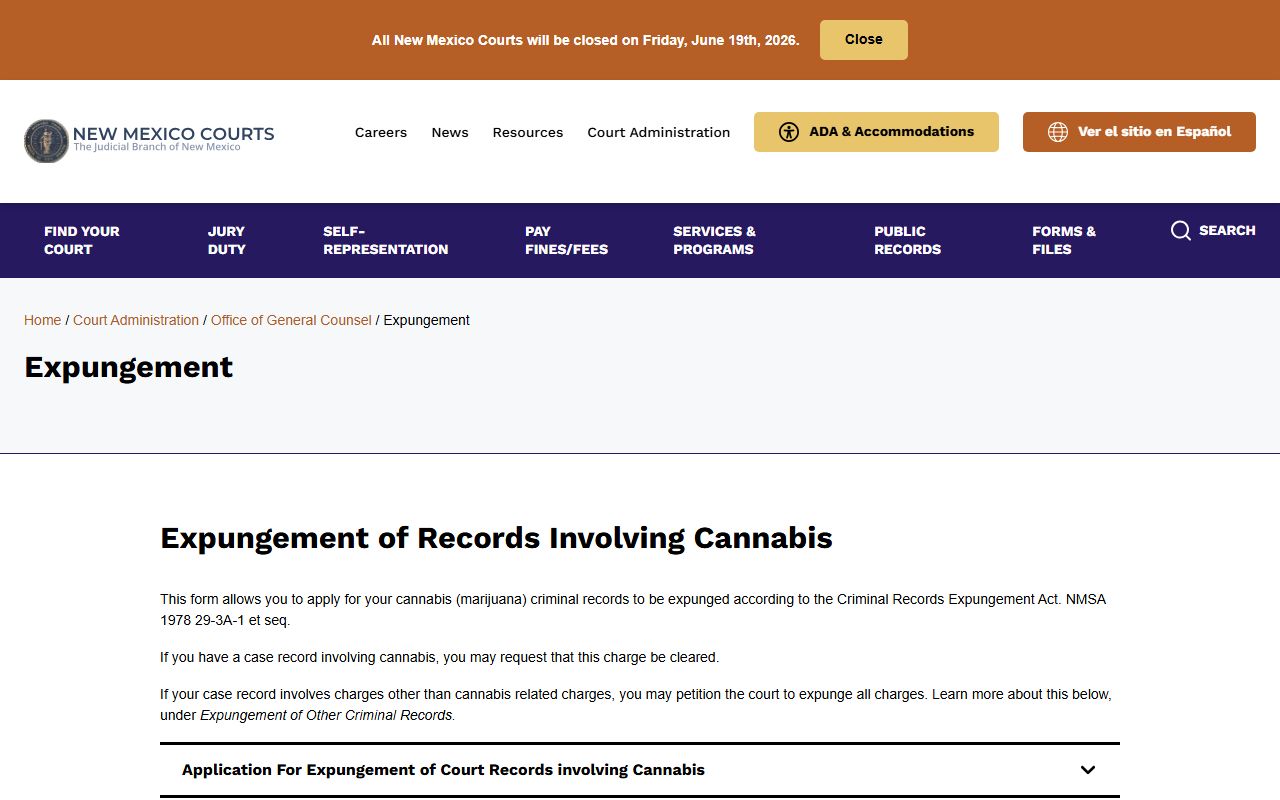
For Curry County, the research notes that a petition may be filed in District Court even if the original case was in a municipal or metropolitan court, when Curry County is the proper venue.
Public Access to Criminal Records
Curry County criminal court records are public when no statute, rule, sealing order, expungement order, or confidentiality rule blocks access. The New Mexico IPRA guide explains the broad right to inspect public records, while NMSA 1978 Section 14-3-15.1 supports the Case Lookup disclaimer on database use and copy-fee limits. Juvenile criminal cases are not displayed through Case Lookup, and protection-order cases under the Family Violence Protection Act are not shown publicly in that system.
Key access point: Use Case Lookup for public electronic data, and use the court clerk for documents, certifications, older files, and case-specific corrections.
Curry County Expungement Follow-Through
New Mexico expungement is a court process, not a counter request to erase a record. A person seeking to remove a Curry County arrest or conviction record from general public access should identify all court numbers, determine whether the case was in District, Magistrate, or Municipal Court, and use the official New Mexico Courts materials for conviction or release-without-conviction petitions. The research also notes that petitioners may need copies from the court where the case was heard before filing.
The New Mexico Department of Public Safety expungement page is part of the post-order law-enforcement record process. DPS is not the court that grants the petition. It handles law-enforcement records after qualifying court orders within its role.
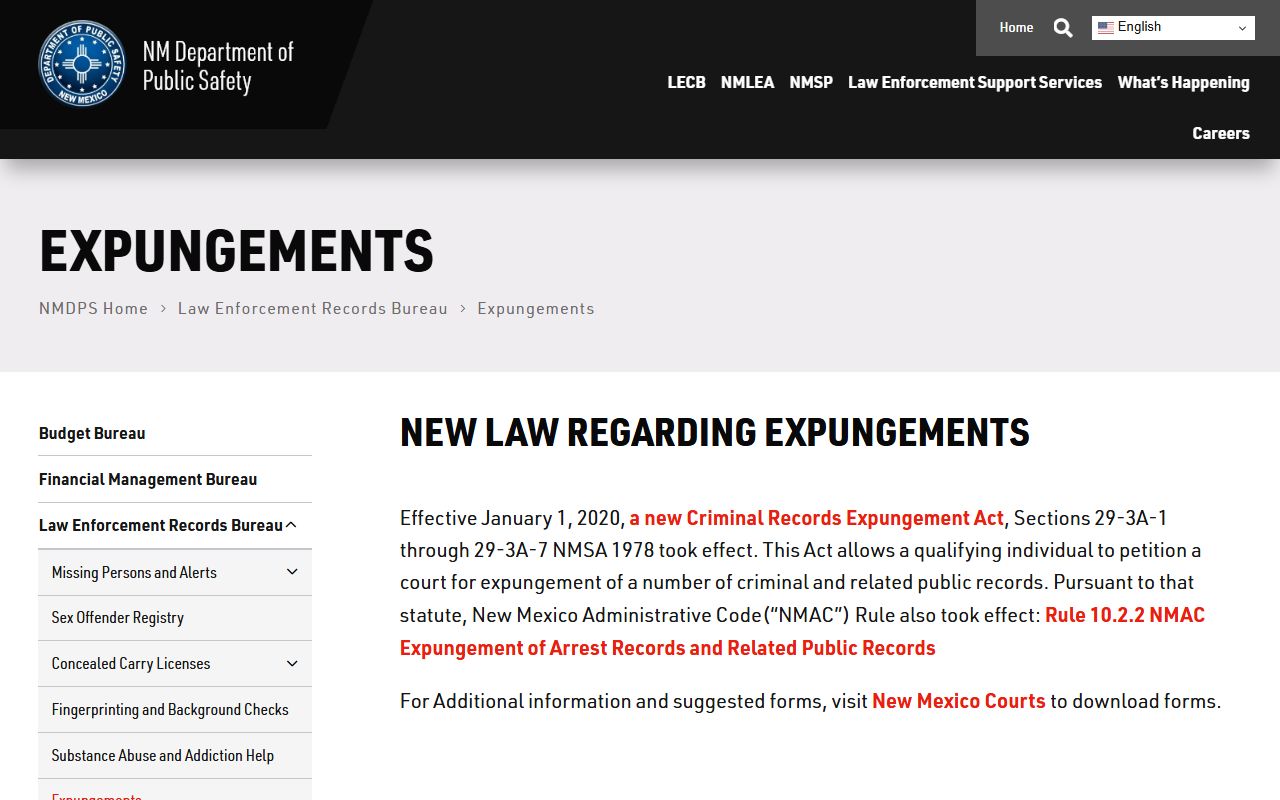
That distinction keeps the record path clear: the court grants the order, and agencies such as DPS carry out their assigned record-handling duties afterward.
Restricted Curry County Criminal Records
Restricted criminal records include juvenile criminal matters, sealed cases, expunged records, some mental-health or treatment-related content, protected personal identifiers, and any document a court withholds under a rule or order. A missing Case Lookup result is not proof that no case exists. It may mean the case is confidential, older than the online system, filed under another court level, or not yet tied to a public electronic entry.
For criminal record questions tied to prosecution, the Ninth Judicial District Attorney serves Curry and Roosevelt Counties. The research identifies District Attorney Quentin Ray and notes that law-enforcement reports flow to the office for prosecution decisions. The public defender channel is separate: the Law Offices of the Public Defender has a Clovis office for eligible defendants, but it is not a public records help desk.